Showing posts with label Recycling. Show all posts

Thursday, October 8, 2020

Visit-and-Volunteer Session at Karun Hijau Recycling and Urban Carbon Store


PENCINTA ALAM NOVEMBER 2020

GREEN LIVING ACTIVITY REPORT: VISIT AND VOLUNTEER SESSION AT KARUN HIJAU RECYCLING AND URBAN CARBON STORE


6 participants visited the Karun Hijau Recycling and Urban Carbon Store in Taman Seri Sentosa, Kuala Lumpur, on Oct 4 for a visit-and-volunteer session and repair workshop. Karun Hijau is a recycling centre that accepts unwanted items including electronic waste for repairs, upcycling, and finally, recycling, once an item reaches the end of its useful life.


Participants learned what items are accepted and not accepted for recycling by Alam Flora, and how even items consisting of different materials, such as Pringles potato chip cans, can be separated into its different elements for recycling (Tip: the can lid is HDPE plastic, the bottom is aluminium, and the can or tube is made of cardboard lined with aluminium foil).


Volunteers from Hara Makers and Reimagine Plastic then showed us how they upcycled plastic packaging into useful items such as pouches and tote bags by ironing 6 layers of plastic bags and sewing them into new items.


Repair heroes from KakiDIY conducted a repair workshop at the end of the session and showed us how to diagnose problems with electrical and electronic devices and carry out repairs on fans, clocks, lamps, a Bluetooth speaker, and an iron.


We are grateful to Karun Hijau, Hara Makers, Reimagine Plastic, KakiDIY, and KakiRepair for extending their hospitality to us and sharing their knowledge so generously. For your information, Karun Hijau also has door-to-door collection services for recyclables and unwanted items such as furniture, and they provide moving and cleaning services.


To learn more about the initiatives named above, click on the links below:

Karun Hijau Recycling and Urban Carbon Store’s Facebook page: https://www.facebook.com/myhijau.com.my/

Karun Hijau’s Pay2Pick recycling collection services: https://www.karunhijau.com/pick-up-service/

KakiRepair (by KakiDIY)’s Facebook page: https://www.facebook.com/groups/kakirepair/

Reimagine Plastic (by Hara Makers)’s Facebook page: https://www.facebook.com/reimagineplasticharamakers


Tuesday, September 10, 2019

The Fashion Industry: A Quick Factsheet


GREEN LIVING COLUMN, PENCINTA ALAM OCTOBER 2019
THE FASHION INDUSTRY: A QUICK FACTSHEET
Compiled and edited by Wong Ee Lynn <gl.mnselangor@yahoo.com>


We rarely think of clothing as an environmental problem. After all, fabrics are not seen to end up in the oceans or harm wildlife the way plastics do, and they are not seen to emit pollution during use. Consumers and shoppers believe that they can always donate the clothes they no longer wear to those less fortunate than they are, and this would keep clothing in use and out of landfills.

However, the reality is that the fashion industry has a massive carbon footprint. Here are some facts that highlight just how damaging the fashion industry can be, and what is being done to make the industry more sustainable:

1.      The apparel and footwear industries together account for more than 8% of global climate impact – the equivalent of 3,990 million metric tonnes of carbon dioxide in 2016 - greater than all international airline flights and maritime shipping trips combined. Total greenhouse gas emissions related to textiles production are equal to 1.2 billion tonnes annually, according to the Ellen MacArthur Foundation.

2.      To make just one pair of denim jeans, 10,000 litres of water is required to grow the one kilo of cotton needed for the pair of jeans. In comparison, one person would take 10 years to drink 10,000 litres of water.

3.      Cumulatively, the fashion industry produces about 20% of global waste water. Textile dyeing is the second largest polluter of water globally. Washing clothes also releases half a million tonnes of microfibres into the oceans every year.

4.      An estimated two-thirds of the emissions in the fashion industry come at the raw materials stage, so improving the way we produce polyester and cotton could have a huge impact. Synthetics, mainly polyester, make up 65% of all fabrics produced today. Cotton makes up around 21%.

5.      Polyester, as a plastic, is made from oil, and extracting and processing the raw material to make it is highly energy-intensive. 46.1 million tonnes of polyester were produced in 2014, releasing 655 million tonnes of CO2 into the atmosphere – around 40% of total fashion industry emissions.

6.      As an agricultural crop, cotton’s carbon footprint is lower than that of polyester, but fertiliser use releases nitrous oxide, a greenhouse gas with 300 times more warming power than CO2.

7.      Currently, less than 1% of garments are recycled into new clothes, with only 20% of fabrics being recycled at all. 85% of textiles go into landfills or get incinerated. This is made worse by the fast fashion trend of recent years. We are buying more clothes than ever before, wearing them fewer times, repairing them less, and throwing them away sooner.

8.      In December 2018, a group of leading fashion brands and NGOs launched the Fashion Industry Charter for Climate Action, under the auspices of the United Nations. The Charter sets out a series of commitments, including a reduction in greenhouse gas emissions of 30% by 2030 and public reporting of emissions.

9.      One of the ways fashion brands can reduce the adverse impact of fashion is by switching raw materials. Switching from virgin polyester to recycled material from plastic drink bottles or ocean plastics can reduce the carbon footprint of polyester by 40%. Likewise, switching from conventional to organic cotton can cut harmful emissions by 46%, as the nitrogen waste from fertilisers is eliminated. Currently, only approximately 1% of all cotton produced is organic.

10.   The fashion industry is working with NGOs and United Nations agencies to come up with more sustainable and ethical manufacturing practices. Adidas are Ecoalf are manufacturing shoes out of ocean plastics. Patagonia has been producing fleece jackets using polyester from recycled bottles since 1993, encourages shoppers to buy only what they need, and mends and recycles older items. H&M and Guess have launched garment collection and recycling programmes. Clothing swap and rental programmes such as Rent the Runway, Girl Meets Dress and YCloset encourage shoppers to rent or swap rather than buy clothes that they will wear only once or twice.

11.   The fashion industry can also reduce their carbon footprint by making energy savings along the value chain. When Hugo Boss analysed the carbon footprint of their transport operations, they realised that switching from air to rail freight could cut emissions by 95%.

12.   Ultimately, for the fashion industry to make a positive impact on the climate, the culture of fast fashion needs to change. We need to buy fewer things, shop only when absolutely necessary, wear our clothes longer and keep things in use longer. We need to stop thinking of clothes as disposable, and adopt circular fashion principles that treat the life cycle of garment as a closed loop.


Sources:
1.      Fashion industry’s carbon impact bigger than airline industry’s: https://www.cbsnews.com/news/earth-day-2019-fashion-industrys-carbon-impact-is-bigger-than-airline-industrys/
2.      Can Fashion Stop Climate Change? https://www.commonobjective.co/article/can-fashion-stop-climate-change
3.      UN Helps Fashion Industry Shift To Low Carbon: https://unfccc.int/news/un-helps-fashion-industry-shift-to-low-carbon

Friday, July 5, 2019

Letter to the Editor: It's Time To Get Serious About Single-Use Plastics


LETTER TO THE EDITOR:
IT’S TIME TO GET SERIOUS ABOUT SINGLE-USE PLASTICS


The purported plastic straw ban has been in effect in KL, Putrajaya, and Labuan since Jan 1, and in Selangor since July 1. Yet, apart from signs in eateries stating that straws are only available upon request, there has been no marked decline in the number of straws used and disposed of. In many eateries, straws are given by default, and when I asked the eatery staff why plastic straws continue to be inserted into beverages by default, the response is that customers often scold the eatery staff and demand straws, so inserting straws by default will save them the additional trip back to the drinks counter.

This clearly shows that the purported straw ‘ban’ is not a ban but merely an advisory. It will have no actual impact on reducing plastic production, consumption or waste in Malaysia, and is merely a publicity exercise by governmental agencies to create the impression that they are doing something about the issue of plastic waste. There is no binding force to this advisory, no enforcement of the restriction against plastic straws, and no penalties or charges for those who wish to continue using plastic straws. It neither reduces the demand for plastic straws nor increases the demand for reusable alternatives such as steel or bamboo straws or compostable alternatives such as plant-based or paper straws, since no alternatives to plastic straws are offered at eateries, and no fee is charged for those who insist on being given straws.   

The risible advisory is also ineffective because plastic straws, as well as other single-use disposable plastic and styrofoam products, are still available for sale in retail outlets and supermarkets. Further, the purported ‘ban’ does not extend to cover hawker stalls, catering services, or even beverage shops such as the mushrooming bubble tea shops.

A March 2019 survey by YouGov Omnibus reports that although 91% of Malaysians expressed the opinion that environmental conservation is important, 22% admitted to using plastic straws daily and 24% use plastic bags daily. From the survey, it is also clear that although the survey participants were aware of the need to reduce the use of single-use items such as plastic bags and straws, 44% believe that the onus is not on them but on the government to protect the environment. This survey, as well as the findings from outreach work done by various environmental NGOs in Malaysia, reveals that there is no lack of environmental awareness in Malaysia, only a lack of a sense of responsibility. Knowing this to be the predominant mindset amongst Malaysians, the government’s half-hearted attempt to limit the use of plastic straws is doomed to fail.

However, recalcitrant and apathetic consumers are not even the main reason the ‘no plastic straw’ campaign is doomed to fail. This campaign, like the one against the free distribution of plastic bags, is and will remain ineffective because the focus is almost entirely on consumers and end users. The onus is on consumers to give up straws and single-use plastics and find their own alternatives. Compliance is higher among urban and educated populations, but for lower income individuals, any charge or ban on plastic bags and straws is seen only as another burden.

In the battle against plastic waste, the government’s focus needs to shift from the end users to producers and businesses. There is currently insufficient pressure on plastics manufacturers to declare their plastic use, set plastic reduction targets, and redesign products and packaging to use less plastic. The existing governmental campaigns have no effect on plastics manufacturers’ production levels or profit margins. Plastics manufacturers love these types of ‘awareness’ and ‘voluntary reduction’ campaigns, because there is no obligation on them to reduce production. If a campaign or initiative fails, they can blame consumers for failure to comply with advisories, for littering, for being ignorant or recalcitrant, and for not recycling enough. Plastics manufacturers also love initiatives such as beach cleanups and recycling drives, because it creates the impression that they are doing something to address the issue of plastic waste without actually reducing production or changing the way they do business. More and more resources will then be poured into awareness and education campaigns and recycling drives in schools, when the crux of the problem is that our planet cannot cope with the amount of plastics already in the biosphere and the amount of plastics that will continue to be produced.

The World Economic Forum reports that we use 20 times as much plastic as we did 50 years ago, and this will continue to rise with incomes and industrialisation. Worldwide, plastic production and use is growing at a 10% rate, but in the developing world and most Asian countries, it is growing much faster than that, and this is more than the existing waste management infrastructure can handle, leading to over 9 million tons of plastics dumped into the oceans each year.

What the plastics industry does not want us to know is that recycling is not the solution, because most single-use plastics are never designed to be recycled. They are designed for low cost, light weight and convenience. As a result, even the best global efforts can only achieve a 10-20% recycling rate. Even when collected and separated for recycling, the low grade and low recyclability of these single-use plastic items means that they will be landfilled and burned. Existing recycling technology isn’t good enough, largely because of limitations in how plastics can be sorted by chemical composition and cleaned of additives. Most plastics that are recycled are shredded and reprocessed into lower-value plastics, such as polyester carpet fibre. Only 2% are recycled into products of the same quality. As long as decision-makers keep the focus on consumer behaviour, plastic manufacturers can continue carrying on business as usual and flooding the market with more and more low-grade, non-recyclable plastic packaging and products.

The Pakatan Harapan government started off their term saying the right things and showing determination to end the scourge of plastic waste in Malaysia. Despite many promising-sounding announcements, there has been no concrete and measurable action taken to reduce plastic production and waste in Malaysia apart from yet more ‘awareness’ campaigns. For awareness and educational campaigns to work, there must be a corresponding ban on the production, import, sale and use of single-use plastic packaging, a higher focus on and incentive for switching to reusable and compostable alternatives, and a setting of reduction targets for manufacturers and businesses.  
      
Science journal reported in 2015 that Malaysia is among the top 8 highest offending ocean plastic polluters globally. Malaysia then signed the December 2017 UN Resolution on microplastics and marine litter, but has not really treated the issue with urgency or done anything with measurable outcomes to date. Consumer awareness campaigns and “request a straw only if you really need one” advisories are not measurable because no targets can be set or measured for such campaigns. Holding X number of roadshows and issuing X number of public service announcements cannot be translated into X tonnes of plastic waste reduced.

One of the most effective ways to bring about an actual, measurable reduction in plastic waste within a definite timeline is to get manufacturers and businesses to set and meet reduction targets. Due to consumer and investor demands, many companies including Nestle and Pepsico are under pressure to disclose their annual plastic packaging use, set reduction goals, and transition to recyclable, reusable or compostable packaging and products. Nestle and Unilever have already pledged to make its plastic packaging fully reusable, recyclable or compostable by 2025, Adidas and Dell are manufacturing products and packaging using recycled ocean plastics, and new start-ups are introducing everything from edible cutlery to sauce and seasoning sachets made of seaweed that will dissolve in water. Companies should not just be focusing on facilitating and encouraging recycling, but on reducing the amount of plastics used and designing their products and packaging out of recycled plastics or compostable materials in the first place. This is the kind of measurable reduction target we want to see in Malaysia. We should incentivise these kinds of innovation, by increased consumer support, or through governmental tax rebates and Research and Development funds.

We have only a small window of time left to deal with plastic pollution and its harmful impact on biodiversity, climate, human health, and the economy. Malaysia cannot achieve pollution and waste reduction targets by waiting for consumers to do the right thing and by protecting manufacturers and the plastics industry. Karnataka State in India has banned several types of single-use plastic items and banned manufacturers from producing these products. Kenya has implemented a nationwide ban on plastics bags, which also covers distributors and producers. Vanuatu has outlawed plastic bags and many single-use plastic items, and is moving towards banning disposable diapers. Malaysia must move beyond advising customers to ask the waiter or go to the counter if they need a straw, and calling this measure a ‘ban’.


WONG EE LYNN
PETALING JAYA, SELANGOR


Wednesday, January 28, 2015

MNS Green Living and TEEAM team up to recycle CFL light bulbs and tubes!


Lightbulb and E-Waste Collection and Recycling Programme and Awareness Talk


Date: Saturday, 7th February 2015

Time: 10.00 a.m. - 11.00 a.m.

Venue: MNS Headquarters (http://www.mns.my/spage.php?pg=contact)

The Electrical and Electronics Association of Malaysia (TEEAM) in collaboration with MNS Green Living will be setting up collection bins in the Malaysian Nature Society headquarters to enable members of the public to correctly dispose of their lightbulbs, fluorescent light tubes and other electronic waste (e.g. batteries, unwanted appliances and gadgets) for recycling and safe disposal.
- Why can't we just dispose of these items with our regular household waste?
- What constitutes scheduled waste?
- What happens to these items once they are sent for recycling?
- How do these items harm the environment and human health if not properly disposed of?
To find out the answers to these questions, please come for the awareness talk at the time and location stated above! Refreshments will be served and we would be happy to collect your light bulbs and e-waste from you on the same day. We will also conduct a Spot Quiz on light bulbs and e-waste recycling. This event is free of charge and open to all. We hope to see many concerned Earth citizens there!


Tuesday, January 14, 2014

The Green Living Donation and Disposal Checklist

PENCINTA ALAM FEB 2014
GREEN LIVING COLUMN
THE GREEN LIVING DONATION AND DISPOSAL CHECKLIST
By Wong Ee Lynn
The Green Living Special Interest Group often receives inquiries on how to recycle, donate or dispose of particularly troublesome items. Seeing as that most people would be carrying out spring cleaning in the first quarter of the year, we have compiled a list of organisations and disposal methods for particular items. As this list is not an exhaustive one and is mostly relevant to those living in the Klang Valley, we welcome all your suggestions and recommendations at gl.mnselangor@yahoo.com

1. Dry cell batteries and used light bulbs: Ikea (at No.2 Jalan PJU 7/2, Mutiara Damansara, 47800 Petaling Jaya) provides bins for the collection of used batteries and lightbulbs for recycling and safe disposal at the Lower Ground Floor, right outside the checkout counters, to the left of the wrapping counter.
2. Leftover paint: There is no reason why you cannot store leftover pain for reuse in touch-up paint jobs. If the quantity is large, you can call up the nearest schools and community centres to ask if they need the paint for school/community beautification projects. If the quantity of leftover paint is small, you can save them for touch-up jobs or to paint repaired and refurbished furniture and wooden pallets and crates. If the paint has dried up, check with Alam Flora or your local waste collection facility to see if you can send the cans for recycling or put them out for collection with your usual rubbish. Seal the paint cans securely with their lids to prevent small animals or birds from getting trapped inside the cans.
3. Old mattresses: This is a tricky item to deal with. What is the reason you are throwing out an old mattress? If it is damp, torn, stained or damaged, then it belongs in a landfill. Tie it up with string and put it out for collection with your usual rubbish. If it is usable and clean, put it out in the sun for a few days to get rid of moisture and odors. Check with organisations such as Reach Out Malaysia (Email: stand.o.fish@gmail.com) to see if there are street folks who could use a mattress. Be prepared to deliver the mattress yourself, as most non-profit organisations are volunteer-run and lacking in manpower and resources.


4. Old clothes, household items and knick-knacks: There are several organisations that collect such items for reuse, recycling and redistribution to the needy. Lovely Nursing Centre for the disabled has a charity shop in a shophouse in SS26/6, Taman Mayang Jaya, Petaling Jaya, which collects household items, books and decorative items for resale. Pertubuhan Amal Sri Sinar (http://recyclecharity.org/en/) has orange-coloured donation bins with hutches in various locations in the Klang Valley, and also has mobile collection services every weekend from 8.00 a.m. - 1.00 p.m. in Taman Megah PJ, Puchong and other locations. The Buddhist Tzu-Chi Merit Society has a large donation bin in Centrepoint, Bandar Utama. Clothes for men can be donated to Reach Out Malaysia for their street clients, which consist mostly of men.
What NOT to give: Please dispose of all broken and damaged items. Clothes that are too stained, dirty, or torn should not be donated but should be used as rags. You can also donate torn and stained clothes to the nearest animal shelter for use as animal bedding, or give them to your mechanic to use as garage rags.
5. Airtight lidded plastic jars and coffee mugs: You know those transparent plastic containers with screw-on red plastic lids that your festive cookies come in? Please wash and dry them and save them, along with coffee mugs, for our indigenous friends to use in their kitchens. Gerai OA, a non-profit fairtrade organisation, will collect them from you at their stall/booth during events. To find out their schedule of events, go to: https://www.facebook.com/media/set/?set=a.96049827366.86091.29058727366&type=3#!/geraioa?fref=ts. Note: Please ensure that the jars have not been used to hold non-food items such as soap or household chemicals to avoid contamination and poisoning.
6. Infants' and children's toys: Please clean and dry your unwanted toys for donation to a local non-profit organisation, Need To Feed The Need (NFN) (Email: nfn.official@gmail.com) for distribution to needy children living in Chow Kit, Kuala Lumpur. Please ensure that toys are not broken, damaged or dirty. Toys must be in good working condition and should not be too bulky or heavy as the children and their mothers often have to walk some distance to collect food and other donations.
7. Old cell phones and cell phone batteries: Nokia Malaysia accepts all old phones for recycling. You can drop off your old phones in the box at the Nokia office in Amcorp Mall, from 9.00-6.00 pm on weekdays. The address is Suite W-10-21, 10th Floor Melawangi Business Suites, Amcorp. Contact number: 03-79572211. (Thank you to Gan Li-Kim for the recce work!)
8. Old magazines: Old but not outdated or torn magazines can be donated to your usual clinic, hair salon, barber shop, or mechanic for their waiting area. Please do not give catalogues, junk mail or TV channel guides. These items belong in the recycling bin.
9. Old books: Children's books can be given to local non-profit organisations such as Kawan-Kawan Mari Kita Membaca (Email: info@marikitamembaca /rusaslina.idrus@gmail.com) or The Revolving Library (https://www.facebook.com/therevolvinglibrary/info) for their education and literacy programmes for underprivileged children. Books for adults can be donated to the Lions Club of Petaling Jaya via their donation bin in Naga's Restaurant, Brickfields, or donated to Green Living (Email: gl.mnselangor@yahoo.com) for fundraising purposes.
10. Electronic and electrical appliances: There are currently no known electronic waste collectors in Malaysia that are certified by the Ministry of Natural Resources and the Environment. Most backyard e-waste collectors will just strip electronic devices of metals that can be recovered for recycling, and then the other components will end up in the landfill. Consider whether you can try to repair and reuse the particular device. Google the address of the local office of your electrical appliance's manufacturer and find out if they have "producer take-back" measures in Malaysia. Most computer manufacturers will accept old PCs, notebooks, batteries and other devices for recycling. In the case of electrical or battery-operated devices with simple components such as alarm clocks, table lamps and blenders, if they are beyond repair, you could try to take them apart entirely and separate the components into plastic, metal and glass for recycling.
11. Old furniture: Old but usable furniture made of real wood, bamboo or metal can be cleaned up and donated to charity. Organisations such as Pertubuhan Amal Sri Sinar (Contact: 03 4297 7022) will come to your home to pick up bulky items such as sofa sets, bicycles and refrigerators, but please do your part by ensuring that the items you wish to donate are clean and in good working condition. Furniture made of plywood, fibreboard and medium-density fibreboard (MDF) should not be donated as they usually have been treated with formaldehyde, and over time formaldehyde can leach out and cause poisoning and contamination. This is especially so when the said items of furniture have been exposed to heat and moisture. They should instead be taken apart and tied or bagged up for collection with usual rubbish. Hopefully, in future there will be better, safer ways of recycling or disposing of MDF, plywood and fibreboard products, and they will be manufactured using safer methods and chemicals.


12. Expired medicine: Expired medicine should not be disposed of in landfills or down water treatment systems, but should be dropped off in the collection boxes at government hospitals, (e.g. Hospital Kuala Lumpur) for safe disposal. (Source: http://www.pharmacy.gov.my/v2/en/content/return-your-medicines-program.html)

Monday, August 13, 2012

A Wheelie Good Idea

PENCINTA ALAM SEPT 2012
ECO KIDS COLUMN

A WHEELIE GOOD IDEA: TOY VEHICLES FROM DISCARDED ITEMS

By Wong Ee Lynn


What's durable, attractive, fun to play with and costs next to nothing? Why, empty laundry detergent bottles and milk jugs, of course! Don't believe us? Check out the photo collage below of various toy vehicles made from discarded household containers and bottle caps and plastic lids. Once the labels have been removed, the "vehicle bodies" don't even need to be painted over, which makes environmental sense as they will be easier to send for recycling once broken or once you get tired of them.


(Photo credits: La Bioguia Facebook page.)

Designed by artist Martine Camillieri, these toy vehicles are a great example of what happens when creativity meets environmental responsibility. Empty bottles and containers could be reused indefinitely until they break, and then they could be sent for recycling.

Although the artist did not provide instructions on how to make these wonderful toys, we can use the resources at hand to try to make toy vehicles with bottle cap wheels that really turn.

Get an adult to help you drill holes in the bottom of the bottle where the axles of the vehicle should go. Be sure to measure the bottle first. If you drill the holes too high, the wheels might not reach the ground. You can make axles from used disposable bamboo chopsticks. Get an adult to measure the chopsticks and cut them into their desired lengths (slightly longer than the width of the bottle), and then glue the bottle caps to the chopstick using silicone glue, epoxy or other strong glue. Make sure you do it in a well-ventilated area, as the glue fumes can be very bad for your health.

If you have the patience, you can also cut windows and hatches for your vehicle before decorating them with stickers or illustrations. Now you are ready to have a wheelie good time with your new toy vehicles!

Friday, July 6, 2012

Paper, Polystyrene or Plastic Cups?

PENCINTA ALAM AUGUST 2012
GREEN LIVING COLUMN


PAPER, POLYSTYRENE OR PLASTIC CUPS?
Edited and compiled by Wong Ee Lynn


There is a lot of debate over whether paper cups are preferable to polystyrene cups from an environmental point of view. Due to consumer pressure, many fast food and snack food franchises have even switched to paper or cardboard cups. The question is, however, whether paper is really better for the environment than polystyrene cups.

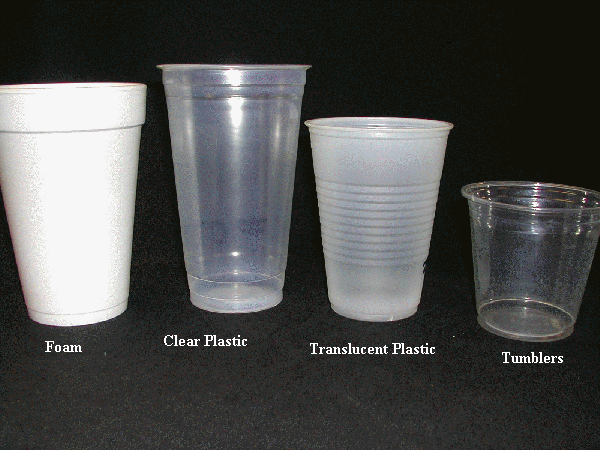
The 3 main choices for disposable cups are paper, polystyrene and PET plastic.

PAPER is the most expensive choice, and despite popular belief, not all paper cups are biodegradable. Many are lined with wax or petrochemical products to waterproof them. Paper production can cause almost twice as much CO2 emissions and energy consumption as creating plastic or polystyrene products. Some paper cups are also not recyclable if they have a wax coating on them. Producing paper cups can also take more material by weight to produce for proper insulation, compared to polystyrene and plastic cups.

A study by Canadian scientist Martin Hocking shows that making a paper cup uses as much petroleum or natural gas as a polystyrene cup. Plus, the paper cup uses wood pulp. The Canadian study said, ‘The paper cup consumes 12 times as much steam, 36 times as much electricity, and twice as much cooling water as the plastic cup.’ And because the paper cup uses more raw materials and energy, it also costs 2.5 times more than the plastic cup.

POLYSTYRENE cups are lightweight and cheap, and can insulate very well but they can degrade or break into smaller pieces that becomes a hazard to the environment and animals. Styrofoam is created from benzene and other chemicals that contribute to smog and global warming. Polystyrene products are not biodegradable and neither practical nor economical to recycle. Polystyrene has been found to break down in oceans, but only into more toxic polymers, where they eventually end up in the food chain of sea birds and marine animals. Researchers from Japan collected water samples from seas in US, Japan, Europe and India, and found that all the water samples were found to contain derivatives of polystyrene, plastics and BPA.

PLASTIC cups seem to be the most environmentally-friendly option as most plastic cups are recyclable, washable and reusable. Plastic is also a much lighter material so there is less transportation and fuel costs needed. Plastic cups are the cheapest to produce and purchase, but the soft versions could not be used for hot drinks.

Now that researchers have found the shockingly large environmental impact of paper cups, what are the choices available to us?

1. Reusable cups are, of course, the preferred choice as the cups will be used many times over, thus reducing the resources needed to make them. They may require water and soap for washing, but this is minimal. Don't forget that disposable cups use a lot of water and chemicals in the manufacturing process as well.

2. If you are entertaining at home, it makes environmental and economic sense to invest in a set of washable, reusable cups. You can lend them out during potlucks, or conversely, borrow a set from friends, thus reducing the need to buy, store and keep track of so many material possessions.

3. Bring your own drinking water and beverages with you when you are outside your home. Politely decline disposable cups and bottled water, and ask for your drink to be served in your own mug, cup or flask when appropriate. Many service staff in restaurants and stalls are only to happy to comply with your request. Starbucks and several other coffee franchises have their own range of "personal reusable tumblers" which they encourage customers to bring and utilise, so if you are a regular patron of coffee franchises, find out if you have the option of bringing and using your own reusable tumbler or mug.

4. If you have no choice but to accept a disposable cup, go for a recyclable plastic cup. Try to reuse or recycle the disposable cups you have acquired. Rinse out and bring home your cups for reuse as pen caddies, planters, paintbrush holders, and yes, drinking cups, before you consign them to the recycling or garbage bin.

(Image credits: http://www.tristatetheatre.com/styrofoam%20Plastic%20cups.htm.)

Friday, April 13, 2012

The Many 'R's Towards Zero Waste

THE MANY ‘R’S TOWARDS ZERO WASTE
by Cindy Chen (gl.mnselangor@yahoo.com)

Rethink

… your consumption. Do you really need those high heels (which looks suspiciously like your other red pair sitting on the 2nd shelf 2nd box to the left, but this one has an extra glass button on! Ooo!)? Or that shiny shiny white Wii so you can play virtual-bowling as opposed to joining your mates at the lanes on a Wednesday evening? Or even a 4x4 to drive around TOWN so you can see the road better, coz afterall, you ARE quite petite. Seriously, before your next purchase, do rethink.

Refuse

… free stuff. Free is NEVER truly free. When restaurants, stalls and supermarkets offer you free stuff like paper napkins, paper placemats, plastic or wooden disposable cutlery, plastic sauceplates.. etc. Look at them suspiciously. Politely say, ‘No, thank you’.

Reduce

… again, your consumption. Daily items like shampoo, detergent, water, electricity, petrol, cooking gas, candles (do we really need all those decorative candles around the home in our heat?!@.. Oh wait, some of us do get cold in our sub-zero air-conditioned homes, or we just light them up during Earth Hour, right?), the works, you get the idea.

Reuse

… clothes. Retro always comes back ever so often. Reuse your mother’s, grandmother’s, even your dad’s! Apparently ‘Dad’s Jeans’ are in at the moment.

Repurpose

… normal everyday objects and transform them into some pretty unexpected, incredible things. Turn your own (or other people’s) junk into treasures. The fact is, many are already doing this, however, it’s only these days that it’s regarded ‘green’. And green, baby, is IN.

Refurbish

… your old table whose varnish has faded with time. Give it a new funcky facelift. Paint it over in a funky color that still goes well with your home décor. You’d be surprised at how lovely it looks again and it might even become a conversational piece.

Reclaim

… parts in your junk can be taken apart to retrieve valuable components and materials. If you can’t find a use for them, send them to those who can. Some organizations these days specialize to retrieving these parts for use in the manufacture of other products.

Recycle

… your glass bottles, aluminium/tin cans, plastic etc. This is the very last R you should consider. Remember, many of these materials can necessarily be avoided in the first place if you place the other Rs first. Remember, recycling itself takes up plenty of resources.


… and the list of Rs goes on. The point is, if you change your mindset, many of these things come naturally. If in doubt, just stick to your core 3Rs and start from there. Good luck!

Collection of Used Batteries for Recycling

PENCINTA ALAM MARCH 2009
GREEN LIVING COLUMN

COLLECTION OF USED BATTERIES FOR RECYCLING

By Wong Ee Lynn


Batteries contain heavy metals such as mercury, lead, cadmium, and nickel, which can contaminate the environment when batteries are improperly disposed of. In landfills, heavy metals have the potential to leach slowly into soil, groundwater or surface water. When incinerated, some heavy metals such as mercury may vaporize and escape into the air, and cadmium and lead may end up in the ash.

Recycling batteries keeps heavy metals out of the soil, water and air, and saves resources because the metals and plastics recovered can be used in making new batteries.

Used batteries are classified as ‘scheduled waste’ due to the harm they could cause to the environment and to human health. There are currently very few facilities in Malaysia that collect used batteries for recycling, and batteries should never be disposed of in normal recycling bins (for paper, glass, plastic and metals) or in charity bins.

Below is a list of the most common batteries and how you should dispose of them:

Automobile Batteries (Lead-Acid Batteries)

These are the most widely recycled batteries as almost every retailer of automobile batteries (auto workshops, battery shops) will collect or buy back used batteries. Reclaimers separate the plastic from the lead and both materials are reprocessed and recycled by battery manufacturers and other industries. A typical automobile battery is made up of 60%-80% recycled lead and plastic.

Cellular Phone Batteries

Most rechargeable cellular phone batteries are small sealed lead acid batteries, and the rest are nickel-cadmium batteries. Fortunately for us, most cellular phone service centres for major cell phone manufacturers/companies (Nokia, Motorola, Samsung, Siemens) provide bins for the collection of used or damaged cell phone batteries. To find out where to send the used batteries of your phone’s particular make or model, visit the website of the particular cell phone manufacturer and follow the public relations and environmental standards links. Failing that, e-mail the Customer Service Department of the phone manufacturer with your query.


Household Dry Cell Batteries

Household dry cell batteries would include alkaline, carbon-zinc, mercuric-oxide, silver-oxide, zinc-air and lithium batteries, both rechargeable and non-rechargeable. Green Living has made inquiries with Alam Flora and was instructed to deal directly with Kualiti Alam Sdn Bhd, which collects, deals with and recycles scheduled wastes in Malaysia. Green Living has made arrangements with Kualiti Alam for the collection of household batteries.


Members are encouraged to set aside all their used household batteries and store them in a dry, safe place, away from water, direct sunlight, flammable materials, children and animals (A lidded jar or container is a good start) and bring them to the MNS Office in Jalan Kelantan, where Green Living has provided a secure bin for the collection of batteries.

At the same time, Green Living wishes to remind everyone that reducing is always a better option than recycling. To reduce your household’s use and disposal of batteries, please heed the following:

1. Buy fewer battery-operated gadgets and gifts. Try to make sure your next gift to someone isn’t a cellular phone, Game Boy, remote controlled car or some other unnecessarily battery-powered device.
2. Buy solar-powered or dynamo-powered gadgets (flashlights, calculators, watches) whenever available. This could also save you money in the long run.
3. Always opt for rechargeable batteries rather than batteries you have to replace.
4. Learn to take proper care of your battery-powered devices (laptops, cell phones, digital cameras) to prevent damage to batteries and devices caused by charging for too long or improperly.
5. Whenever available, use ‘hybrid’ batteries such as rechargeable nickel metal hybrid (NiMH), as they are longer lasting, less toxic and will not discharge quickly when left idle, unlike rechargeable batteries using older technology.

Light Bulb Collection and Recycling

PENCINTA ALAM FEBRUARY 2009: GREEN LIVING COLUMN

LIGHT BULB COLLECTION AND RECYCLING

By Wong Ee Lynn


WHY ARE LIGHT BULBS CONSIDERED HAZARDOUS WASTE?

Fluorescent light bulbs, although energy-efficient, contain a very small amount of mercury sealed within the glass. Compact fluorescent light bulbs (CFLs) and other fluorescent light bulbs are categorized as hazardous waste, and if discarded in the trash, may break and cause mercury to be released into the environment.

Once in the environment, mercury can be converted to an organic form that accumulates in living organisms and contaminates the food chain. To prevent this, light bulbs should be taken to a recycler before they break. Recyclers can recover the mercury and other components such as glass, phosphor and aluminium for reuse.

If your local authority offers no other disposal options except your household garbage, place the light bulb(s) in a plastic bag and seal it before putting it in the trash. However, if your municipality incinerates its garbage, contact your local authority instead for other household hazardous waste collection options. Never send a fluorescent light bulb or tube or any other mercury-containing product to an incinerator.


WHERE IN THE KLANG VALLEY CAN I SEND LIGHT BULBS FOR RECYCLING?


For all of us living in the Klang Valley, Ikea (at No.2 Jalan PJU 7/2, Mutiara Damansara, 47800 Petaling Jaya) provides a used lightbulb collection service at the Lower Ground Floor, right outside the checkout counters, to the left of the wrapping counter. Just deposit your used light bulbs in the bins provided. If the bulb is broken, put it in a can or jar with a lid before putting it in the bin. Ikea engages the services of a waste management contractor that will crush all used bulbs using a 'bulb eater' with activated carbon filters that capture and neutralise the mercury vapours released from the bulbs during the crushing process. The crushed bulbs and filters are then disposed of in a secure landfill in Bukit Nenas, Seremban.

We at the Malaysian Nature Society thank Ikea for this socially and environmnetally responsible initiative.


WHAT CAN WE DO TO IMPROVE LIGHT BULB COLLECTION AND RECYCLING SERVICES?

As environmentalists, we can try to lobby the government, the electronics and lighting industry and electronics retailers to:
- Reduce the mercury content in fluorescent lighting products;
- Start a ‘manufacturer take-back’ policy that requires manufacturers to accept and recycle their own products at the end of the products’ useful lives; and
- Set up more collection points for hazardous household waste such as light bulbs and batteries.

Recycling Aluminium Foil and other Household Metals

GREEN LIVING COLUMN PENCINTA ALAM JANUARY 2009

RECYCLING ALUMINIUM FOIL AND OTHER HOUSEHOLD METALS

By Wong Ee Lynn


The Green Living SIG was recently asked the following question at an MNS event: “Can aluminium foil be recycled?”

Pure aluminium foil can be recycled and will be accepted by recycling collection centres together with your aluminium cans. Foil items can include:
• kitchen foil
• foil milk bottle tops
• baking and freezing trays
• takeaway and ready-meal containers

Silver-look packaging such as snack and potato chip packets and chocolate wrappings CANNOT be recycled.

To determine if something is aluminium, you can do the Scrunch Test: If the foil can be crushed or scrunched up, and does not spring back into shape, it is probably aluminium. If it bounces back, then it is plastic, NOT aluminium. Foil wrapping such as chocolate wrappers and shiny giftwrap that have a paper underside are foil-coated paper and CANNOT be recycled.

Please make sure all aluminium foil and containers are clean and free of oil and food residue before being recycled.

WHY RECYCLE ALUMINIUM?

Aluminium is produced from bauxite, a clay-like ore that is rich in aluminium compounds. The aluminium is only found as a compound called alumina, which is a hard material consisting of aluminium combined with oxygen. This alumina has to be stripped of its oxygen in order to free the aluminium. The alumina is dissolved in a molten salt at a reduction plant and a powerful electric current is run though the liquid to separate the aluminium from the oxygen. This process uses large quantities of energy.

Recycling 1kg of aluminium saves up to 6kg of bauxite, 4kg of chemical products and 14 kWh of electricity.

Recycling aluminium requires only 5% of the energy and produces only 5% of the CO2 emissions as compared with primary production and reduces the waste going to landfill. Aluminium can be recycled indefinitely, as reprocessing does not damage its structure. Aluminium is also the most cost-effective material to recycle.

A recycled aluminium can saves enough energy to run a television for 3 hours.

OTHER METALS

Although present in smaller quantities - all metals, including nickel, copper, silver, gold, lead, brass and more, can be recycled. Given their recognised value, a smaller quantity of these metals are in circulation. However, despite the reliance on these metals by specific industries, eg. electronics, their presence is often neglected when householders dispose of items.